Before electricity, every farmhouse had a root cellar. It was not a luxury or an architectural curiosity. It was the reason families ate in winter. The cool, dark, humid environment underground preserves root vegetables, apples, cabbages, and winter squash for months without any power, any canning, or any processing at all.
Storage as stewardship
“There is treasure to be desired and oil in the dwelling of the wise; but a foolish man spendeth it up” (Proverbs 21:20, KJV). The wise household does not consume everything at harvest. It stores, plans, and portions so that the bounty of summer sustains the family through the lean months.
Ellen White spoke to this principle directly: “Economy in all things should be practiced. Nothing should be wasted. Our means must be used wisely. We cannot afford to let anything go to waste” (Counsels on Stewardship, p. 299). A root cellar is economy made physical — a room that saves what would otherwise rot.
How a root cellar works
The principle is simple. Below the frost line, the earth maintains a steady temperature between 32 and 40 degrees Fahrenheit. Humidity stays naturally high. These conditions slow decomposition and prevent freezing. A well-built root cellar keeps potatoes firm for six months, carrots crisp through January, and apples edible well into spring.
The essential requirements are insulation from heat above, ventilation to manage humidity and prevent ethylene gas buildup from ripening fruit, drainage to keep the floor dry, and darkness to prevent sprouting.
Building options
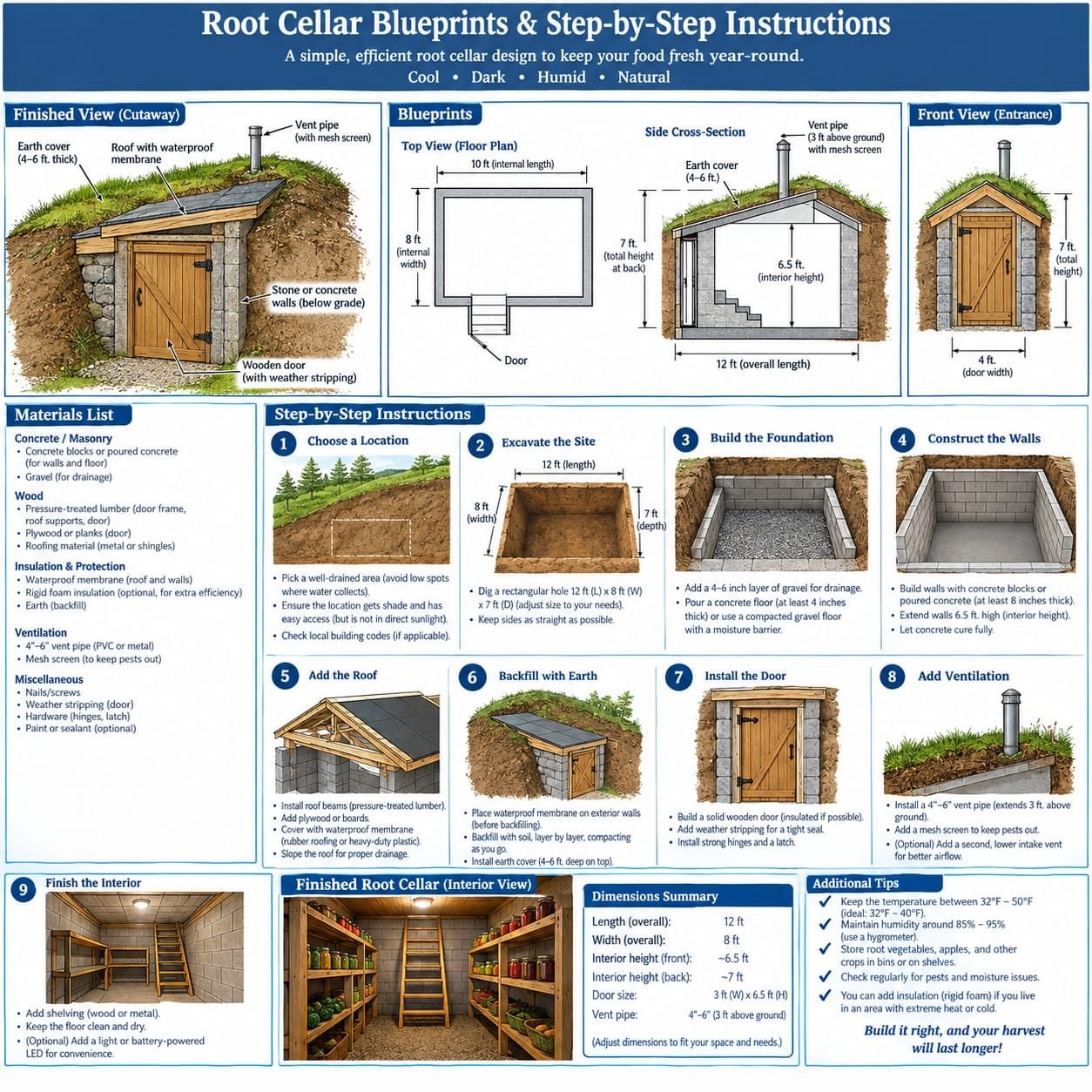
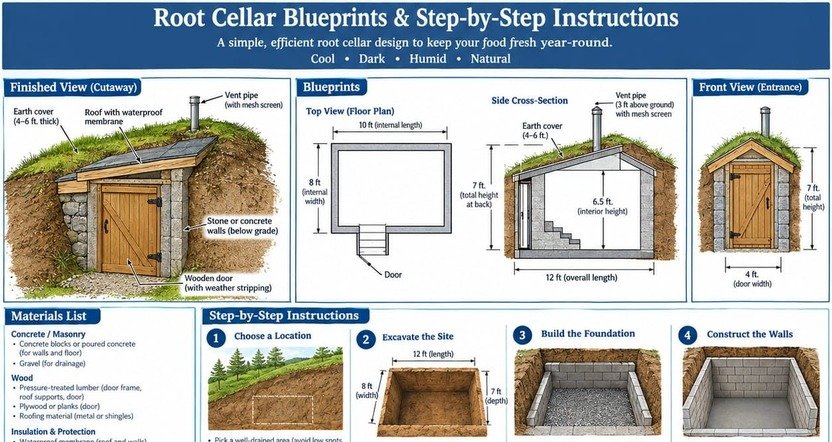
The dug cellar. The traditional method: excavate into a hillside or dig straight down, frame with timber or stone, and cover with earth. This is the most effective design and the most labor-intensive to build.
The buried container. A food-grade barrel, a chest freezer (unplugged), or a galvanized stock tank buried below grade and insulated with straw bales offers a quick, inexpensive cellar for a small harvest.
The basement room. If the homestead has a basement, an unheated corner can be walled off and ventilated to create a root cellar within the existing structure. Insulate the interior walls and ceiling, and add vents to the outside.
What to store
Not everything stores equally. Potatoes, beets, turnips, carrots, parsnips, onions, garlic, winter squash, cabbage, and apples are the staples of root cellar storage. Each has its preferred temperature and humidity range. Keep apples separate — they produce ethylene gas that accelerates sprouting in potatoes and wilting in other vegetables.
Check your stores weekly. Remove anything showing decay before it spreads. A root cellar is a living system that rewards attention and punishes neglect.
An ancient solution for modern times
The root cellar asks nothing of the grid. It requires no electricity, no fuel, and no consumable supplies. It works as well in a crisis as it does in calm. For the homesteading family serious about self-sufficiency, it is not an option. It is infrastructure.