A man who cannot feed himself is a man who depends on the mercy of systems he did not build and cannot control. That is a precarious place to stand in any age, but especially in these last days, when supply chains stretch thin and the cost of a loaf reveals how far we have drifted from the soil.
The garden is not optional
Scripture does not treat food production as a hobby. It is the first work ever assigned. “And the Lord God took the man, and put him into the garden of Eden to dress it and to keep it” (Genesis 2:15, KJV). Before there was a sanctuary, before there was a Sabbath command written in stone, there was a garden and a mandate to tend it.
Ellen White reinforced this truth plainly: “Study in agricultural lines should be the A, B, and C of the education given in our schools” (Testimonies for the Church, vol. 6, p. 179). She did not say it should be an elective. She said it should be the foundation.
Six methods that sustain a household
Country living demands more than a few tomato plants in a raised bed. A self-sufficient homestead draws from at least six streams of food production, each one reinforcing the others.
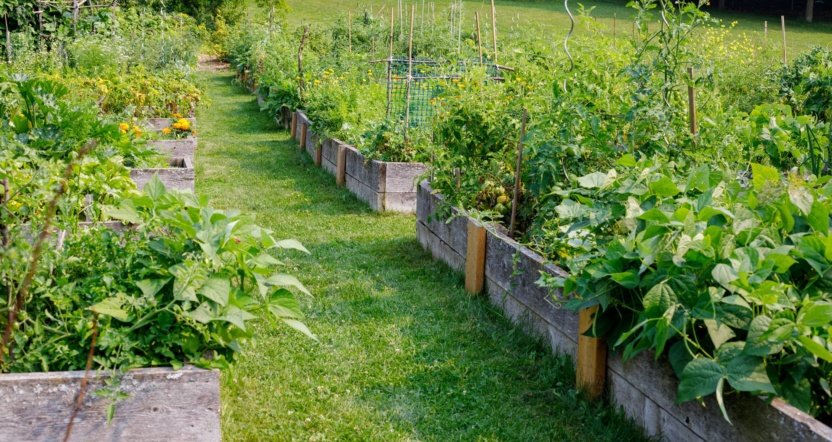
Gardening. Intensive vegetable gardening on even a quarter acre can supply a family year-round when combined with succession planting and season extension. Start with what grows well in your climate and expand each year.
Fruit cultivation. Fruit trees, berry bushes, and grapevines take years to establish but produce for decades. Plant them first, even before the garden beds are laid out. “And the earth brought forth grass, and herb yielding seed after his kind, and the tree yielding fruit” (Genesis 1:12, KJV).
Seed saving. A household that saves its own seed is a household that cannot be cut off from its food supply. Learn to isolate varieties, dry seed properly, and store it in cool, dark conditions.
Composting and soil building. Healthy soil is the engine beneath everything. Kitchen scraps, animal manure, leaf mould, and cover crops all feed the ground that feeds the family.
Animal husbandry. Chickens for eggs, goats for milk, bees for pollination and honey. Even a small flock or herd adds protein and fertility to the homestead cycle.
Foraging and wildcrafting. Every region offers edible and medicinal plants growing freely. Learning what is already there is both practical and humbling.
Start now, not later
The servant of the Lord wrote with urgency: “Again and again the Lord has instructed that our people should take their families away from the cities, into the country, where they can raise their own provisions” (The Adventist Home, p. 141). The instruction was not theoretical. It was a directive.
The time to learn food production is not after the crisis. It is now, when seeds are still available, when soil can still be amended, when mistakes can still be corrected in the next growing season. A family that waits until necessity forces their hand will find the learning curve steep and the pantry empty.
Begin where you are. Even a windowsill herb garden teaches the rhythm of growth. But do not stop there. Press toward a full garden, a fruit orchard, a root cellar stocked for winter. The land will teach you what no book can, if you give it your hands and your time.